Defence & Security

UK Eyes Additional F-35A Jets to Bolster NATO Nuclear Role

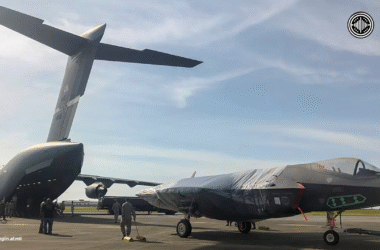
The Ministry of Defence has confirmed plans to acquire 12 F-35A Lightning II jets as part of Britain’s renewed commitment to NATO’s nuclear-sharing mission, while keeping the door open to future purchases. The move underscores a shift in the UK’s strategic posture and comes ahead of the government’s upcoming Defence Investment Plan.

The F-35A, unlike the short take-off and vertical landing (STOVL) F-35B variant currently in UK service, is equipped to carry the US B61 nuclear gravity bomb. This makes it the aircraft of choice for NATO’s nuclear deterrence role, an area where the UK is seeking to play a more prominent part amid rising global tensions and an increasingly assertive Russia.

According to Defence Minister Maria Eagle, the 12 jets will come from within the broader commitment to procure 138 F-35s overall. However, she added that the mix of A and B variants remains under review, with further details to be finalised in the autumn defence review.

The decision to bring the F-35A into service has been broadly welcomed by defence analysts, though concerns remain over the operational implications. The F-35A cannot operate from Britain’s aircraft carriers, unlike the B variant, prompting warnings from naval experts about potential reductions in carrier strike capability if too many B models are replaced.

Additionally, the A model uses a boom refuelling system, incompatible with the RAF’s Voyager tankers. Without significant upgrades or reliance on allied support, this could hamper the RAF’s independent operational range, raising questions about future logistics planning.

Despite these limitations, the industrial case for continued F-35 procurement remains strong. Britain manufactures roughly 15% of each F-35, with over 100 UK-based suppliers contributing to a programme that supports around 20,000 jobs. Defence commentators argue that this industrial stake justifies deeper involvement, particularly as Britain looks to sustain aerospace capability ahead of the next-generation Global Combat Air Programme (GCAP) being developed with Italy and Japan.

Concerns over the long-term viability of the UK’s domestic fighter production persist, particularly following reports that Typhoon assembly lines at BAE Systems have paused due to a lack of new orders. In this context, continued investment in the F-35 programme provides a degree of industrial continuity and strategic reassurance.

With the Defence Investment Plan expected later this year, ministers will face key decisions on fleet composition, capability priorities, and support for the UK’s defence manufacturing base. Against a backdrop of increasing international instability, the need for clear, credible defence planning is more urgent than ever.

DOWNLOAD IPFS

Leave a Comment

Your email address will not be published. Required fields are marked *

*

OPENVC Logo OpenVoiceCoin $0.00
OPENVC

Latest Market Prices

Bitcoin

Bitcoin

$67,176.70

BTC 0.49%

Ethereum

Ethereum

$1,969.21

ETH 1.20%

NEO

NEO

$2.73

NEO 6.10%

Waves

Waves

$0.48

WAVES 1.62%

Monero

Monero

$338.14

XMR -2.57%

Nano

Nano

$0.58

NANO 4.26%

ARK

ARK

$0.19

ARK 6.00%

Pirate Chain

Pirate Chain

$0.27

ARRR 5.28%

Dogecoin

Dogecoin

$0.09

DOGE 3.06%

Litecoin

Litecoin

$53.25

LTC 2.28%

Cardano

Cardano

$0.26

ADA 3.80%

Subscribe to Blog via Email

Enter your email address to subscribe to this blog and receive notifications of new posts by email.