Defence & Security

Queue Forms for UK’s Next-Gen Fighter Jets as Tempest and Typhoon Push Ahead

DOWNLOAD IPFS

The BAE Systems’ Warton facility in Lancashire robotic arms are assembling a test model of the next-generation fighter jet known as Tempest. Armed with sleek, cropped delta wings and stealth enhancements, the aircraft, part of the Global Combat Air Programme (GCAP; a UK‑Italy‑Japan initiative), is expected to take its maiden flight in 2027.

Inside the same hangar, however, production of the Eurofighter Typhoon, a mainstay of the Royal Air Force (RAF), has paused. This downtime has raised alarms among manufacturing unions concerned about job losses and erosion of domestic aeronautical expertise. Yet BAE remains optimistic: aircraft executives report strong demand from export markets, particularly Turkey, Qatar, and Saudi Arabia, which could secure around 150 new orders and sustain the Warton line for the next decade.

This situation exposes a classic defense-industry dilemma: balancing top-tier capability, local manufacturing, and cost control. Reaching all three simultaneously is notoriously difficult, prompting strategic compromises between domestic needs and export viability.

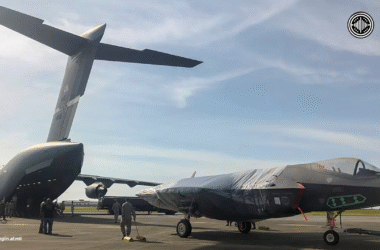
Meanwhile, the government’s broader defense posture supports this industrial push. Fuelled by commitments to raise defense spending to 3.5 percent of Gross Domestic Product (GDP) under the North Atlantic Treaty Organization (NATO) alliance, the UK has also approved the purchase of U.S.-built F‑35 fighters. While BAE contributes critical components, navigation, radar, and communications, to the F‑35 program, each aircraft carries a substantial price tag. The estimated lifetime cost now reaches £57 billion, though the National Audit Office warns it may rise to £71 billion.

BAE has voiced support for enhancements to existing Typhoon jets, including next-generation radars, encrypted communications, and avionics upgrades. Such modernizations are seen as essential to unlock export deals and sustain production from Warton.

Looking ahead, the Tempest fighter is poised to play a pivotal role. As a core component of the GCAP effort, merging UK’s Tempest, Italy’s, and Japan’s sixth-generation projects, it promises advanced stealth, internal weapon storage, and long-range capabilities. With over £12 billion earmarked through 2035, and interest from nations around the world, including Saudi Arabia, some officials describe a “queue” of potential buyers.

However, lingering questions about the long-term viability of crewed jets in the era of autonomous drones remain. As Europe forms competing sixth-generation programs, such as the Future Combat Air System (FCAS) led by France, Germany, and Spain, BAE and its partners must navigate complex political, industrial, and technological landscapes to deliver on Tempest’s bold promise.

Leave a Comment

Your email address will not be published. Required fields are marked *

*

OPENVC Logo OpenVoiceCoin $0.00
OPENVC

Latest Market Prices

Bitcoin

Bitcoin

$67,487.24

BTC -2.41%

Ethereum

Ethereum

$1,959.08

ETH -3.22%

NEO

NEO

$2.68

NEO 1.79%

Waves

Waves

$0.47

WAVES -1.68%

Monero

Monero

$349.11

XMR -0.08%

Nano

Nano

$0.56

NANO 0.12%

ARK

ARK

$0.19

ARK -0.45%

Pirate Chain

Pirate Chain

$0.25

ARRR -7.29%

Dogecoin

Dogecoin

$0.09

DOGE -1.47%

Litecoin

Litecoin

$52.77

LTC -1.33%

Cardano

Cardano

$0.26

ADA -1.82%

Subscribe to Blog via Email

Enter your email address to subscribe to this blog and receive notifications of new posts by email.