Human Rights

London Police Urged to Show Restraint at Protest

Download IPFS

Amnesty International UK has called on the Metropolitan Police to act with restraint during a planned demonstration in London this weekend, amid growing concerns over arrests linked to the recent ban on the activist group Palestine Action.

The appeal comes ahead of a protest set to take place in central London on Saturday, organised by campaign group Defend Our Juries. The demonstration follows the government’s decision on 5 July to ban Palestine Action under sections 12 and 13 of the Terrorism Act 2000, making public expressions of support for the group a criminal offence.

According to reports, more than 200 people have already been arrested across the country for carrying placards or making statements such as “I Oppose Genocide. I Support Palestine Action.” Police have indicated that hundreds more could be detained at the weekend protest, prompting the Ministry of Justice to initiate what is known as a “capacity gold demand,” which involves preparing prisons for a potential increase in detainees.

Amnesty UK’s Chief Executive, Sacha Deshmukh, issued a letter to Metropolitan Police Commissioner Sir Mark Rowley, warning against heavy-handed tactics and urging officers to uphold international human rights standards.

“Peaceful protesters must be free to express themselves this weekend without fear of reprisals,” Deshmukh stated. “Arresting individuals on terrorism charges for peacefully holding placards contradicts international human rights law.”

He went on to say that while tensions over the conflict in Gaza remain high, the right to lawful protest must be protected. “There must remain space to express that outrage through peaceful protest,” he added.

The ban on Palestine Action, which came after activists targeted defence-related infrastructure, including spray-painting aircraft at a Royal Air Force base, has drawn criticism both domestically and internationally. A High Court judge recently approved a full hearing for a judicial review into the government’s decision, indicating that the case involves “serious issues to be tried.”

This development has raised fresh questions about the legal basis for arresting peaceful demonstrators under anti-terrorism legislation. Legal experts and civil liberties campaigners argue that the broad application of these powers risks undermining fundamental rights to free speech and assembly.

The United Nations High Commissioner for Human Rights has criticised the UK government’s decision, while the UN Special Rapporteur on Counter-Terrorism and Human Rights has been granted permission to intervene in the judicial review proceedings.

Amnesty International maintains that expressions of support for Palestine Action, so long as they do not incite violence, hatred, or serious criminal damage, do not meet the legal threshold for restriction under international law.

Deshmukh’s letter argues that the suppression of non-violent protest not only contradicts the UK’s obligations under the European Convention on Human Rights but also sets a concerning precedent for the treatment of dissent.

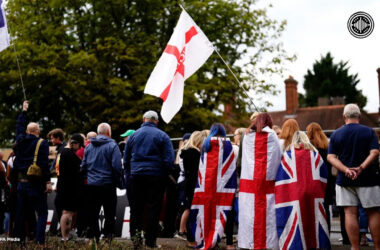
Defend Our Juries, a campaign group focused on safeguarding protest rights and fair trial principles, has been holding demonstrations in Westminster since the ban took effect. Its organisers say Saturday’s protest will include approximately 500 people, many of whom plan to openly defy the ban by displaying placards or slogans in support of the proscribed group.

The Metropolitan Police have not confirmed how they intend to respond to the planned event, but have maintained that they will enforce the law as necessary. However, Amnesty and other civil rights groups have warned that such an approach risks criminalising lawful protest.

Deshmukh concluded: “I call again on the Met police to think carefully before making rash decisions this weekend, their job is to enable peaceful assembly, not shut it down.”

The situation has drawn increased attention due to the intersection of national security policy, freedom of expression, and international legal obligations. Critics of the ban argue that it marks a shift towards more authoritarian policing of protest, particularly when related to controversial foreign policy matters.

While the government has defended the ban as a necessary measure to protect national infrastructure and public safety, concerns remain over the proportionality of its enforcement and its implications for civil liberties in the UK.

Leave a Comment

Your email address will not be published. Required fields are marked *

*

OPENVC Logo OpenVoiceCoin $0.00
OPENVC

Latest Market Prices

Bitcoin

Bitcoin

$89,376.56

BTC -0.25%

Ethereum

Ethereum

$3,038.59

ETH 0.25%

NEO

NEO

$4.12

NEO 0.38%

Waves

Waves

$0.74

WAVES 8.58%

Monero

Monero

$386.14

XMR -2.32%

Nano

Nano

$0.79

NANO -0.42%

ARK

ARK

$0.29

ARK -0.25%

Pirate Chain

Pirate Chain

$0.24

ARRR -0.32%

Dogecoin

Dogecoin

$0.14

DOGE 0.05%

Litecoin

Litecoin

$82.25

LTC 2.14%

Cardano

Cardano

$0.42

ADA 1.39%

Subscribe to Blog via Email

Enter your email address to subscribe to this blog and receive notifications of new posts by email.