Defence & Security

UK F‑35B Stealth Jet Undergoing Secret Repairs in India under Tight Security

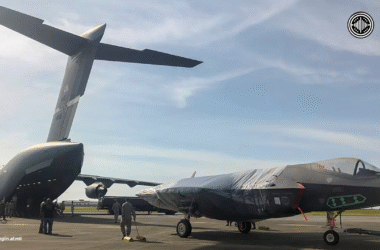
A British Royal Navy F‑35B stealth fighter jet is currently receiving discreet repair work at Thiruvananthapuram International Airport in Kerala. The operation, prompted by an emergency landing in mid-June, is being overseen exclusively by UK personnel, raising security discussions amid the technical patch-up.

The jet touched down on 14 June following a hydraulic system issue during a joint Indo‑British naval exercise over the Arabian Sea. Since then, the aircraft has remained under strict UK military control. Indian security forces from the Central Industrial Security Force (CISF) maintained a perimeter around the wider site but were barred from the immediate hangar space housing the aircraft.

For nearly three weeks, the F‑35B was parked at Bay 4, exposed to Kerala’s humid conditions. According to UK sources, specialists from the Royal Air Force (RAF), including Lockheed Martin technicians- refused an Indian Air Force offer of hangar space, citing concerns about the jet’s sensitive stealth and electronic systems. Eventually, the aircraft was moved into a sealed section of Air India’s Maintenance, Repair and Overhaul (MRO) hangar 2 once a UK‑installed cooling system was secured.

A contingent of 25 UK military engineers flew in aboard an RAF A400M Atlas to begin diagnostics and repair. The Ministry of Defence (MoD) confirmed this team arrived with specialist equipment, and that repairs have now started on the jet. While initial attempts by a smaller British crew onboard the HMS Prince of Wales were unsuccessful, the MoD says if on-site repairs fail, the aircraft may be disassembled and transported back to the UK via military transport.

From a centre‑right standpoint, the incident reflects the delicate balance between military transparency and technological secrecy. The F‑35B represents some of the most advanced fighter capabilities in existence, notably its radar-evading stealth, electronic warfare suites, and surveillance systems. Allowing Indian personnel to get too close could risk exposure of critical technology.

This carefully controlled procedure underscores the trust placed in India as a host environment yet reaffirms that sovereignty over sensitive military assets remains paramount. Logistically, conducting high-security repairs overseas rather than repatriating the aircraft demonstrates both operational resilience and strategic flexibility.

In light of rising geopolitical tensions and advancing defence partnerships, such capability to repair advanced aircraft abroad is a welcome sign of UK military diplomacy. It shows readiness to sustain operations across distance, even when unexpected technical issues arise far from home soil.

As the repair progresses, attention will shift to whether the jet can return to the HMS Prince of Wales or must be airlifted back to Britain. Either outcome will test both logistics and the strength of UK‑India cooperation in defence affairs.

DOWNLOAD IPFS

Leave a Comment

Your email address will not be published. Required fields are marked *

*

OPENVC Logo OpenVoiceCoin $0.00
OPENVC

Latest Market Prices

Bitcoin

Bitcoin

$67,621.78

BTC -8.02%

Ethereum

Ethereum

$1,970.45

ETH -7.57%

NEO

NEO

$2.87

NEO -7.38%

Waves

Waves

$0.52

WAVES -11.14%

Monero

Monero

$330.48

XMR -13.09%

Nano

Nano

$0.60

NANO -2.05%

ARK

ARK

$0.18

ARK -10.60%

Pirate Chain

Pirate Chain

$0.31

ARRR -14.91%

Dogecoin

Dogecoin

$0.09

DOGE -8.93%

Litecoin

Litecoin

$54.00

LTC -6.62%

Cardano

Cardano

$0.26

ADA -7.94%

Subscribe to Blog via Email

Enter your email address to subscribe to this blog and receive notifications of new posts by email.