Defence & Security

UK-Japan-Italy Fighter Jet Programme Unlikely to Add New Partners, Says BAE

DOWNLOAD IPFS

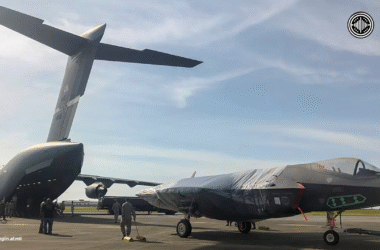
The prospects of new nations joining the Global Combat Air Programme (GCAP), the joint sixth-generation fighter jet initiative led by the United Kingdom, Japan, and Italy, are fading, according to defence giant BAE Systems. As the programme progresses, the window for additional countries to join appears to be closing, reinforcing the likelihood that the core trio will remain unchanged.

Speaking at the Farnborough Airshow, BAE Systems Chief Executive Charles Woodburn stated that although discussions with potential new partners, such as Saudi Arabia, are ongoing, the timeframe for expansion is rapidly narrowing. “With every month that passes, the chances of adding new partners diminish,” Woodburn remarked, citing the technical and organisational complexities of integrating new contributors at this stage of development.

GCAP was formally launched in 2022, following the merger of the UK’s Tempest programme with Japan’s F-X project. The trilateral effort aims to deliver a next-generation combat aircraft by 2035, equipped with advanced stealth capabilities, artificial intelligence integration, and next-level sensor and weapons systems. The programme is intended not only to bolster the defence capabilities of the partner nations but also to support their domestic aerospace sectors and technological sovereignty.

While the project has expressed openness to wider international involvement, it is becoming increasingly clear that time constraints and differing strategic priorities make further expansion unlikely. Saudi Arabia has shown strong interest in joining the programme, but its inclusion has met resistance, particularly from Tokyo, which has cited concerns around regional security alignments. Woodburn declined to comment on the specifics of Riyadh’s involvement but reiterated that GCAP remains open to compatible partners.

For the UK, limiting the partnership to the current three nations may offer practical advantages. A streamlined development process allows for quicker decision-making and clearer project governance, both essential for meeting the 2035 deadline. It also ensures that Britain retains significant influence over the programme’s direction and protects sensitive defence technologies, an increasingly important consideration amid growing geopolitical volatility.

With rival European efforts such as the Franco-German Spanish Future Combat Air System (FCAS) gaining momentum, the pressure is on for GCAP to deliver. Though the absence of additional international partners may limit its geopolitical reach, the UK’s leadership role in GCAP reinforces its commitment to defense innovation and strategic autonomy, especially at a time when global security challenges are intensifying.

Leave a Comment

Your email address will not be published. Required fields are marked *

*

OPENVC Logo OpenVoiceCoin $0.00
OPENVC

Latest Market Prices

Bitcoin

Bitcoin

$67,487.24

BTC -2.41%

Ethereum

Ethereum

$1,959.08

ETH -3.22%

NEO

NEO

$2.68

NEO 1.79%

Waves

Waves

$0.47

WAVES -1.68%

Monero

Monero

$349.11

XMR -0.08%

Nano

Nano

$0.56

NANO 0.12%

ARK

ARK

$0.19

ARK -0.45%

Pirate Chain

Pirate Chain

$0.25

ARRR -7.29%

Dogecoin

Dogecoin

$0.09

DOGE -1.47%

Litecoin

Litecoin

$52.77

LTC -1.33%

Cardano

Cardano

$0.26

ADA -1.82%

Subscribe to Blog via Email

Enter your email address to subscribe to this blog and receive notifications of new posts by email.